Science News · Wetenschap
Free-falling atoms in space put a new twist on Galileo’s gravity test
Scientists have recreated Galileo's famous gravity experiment with atoms in space, achieving unprecedented precision in testing the weak equivalence principle. This principle, fundamental to Einstein's general relativity, states that gravitational and inertial mass are equivalent, meaning objects of different masses fall at the same rate.
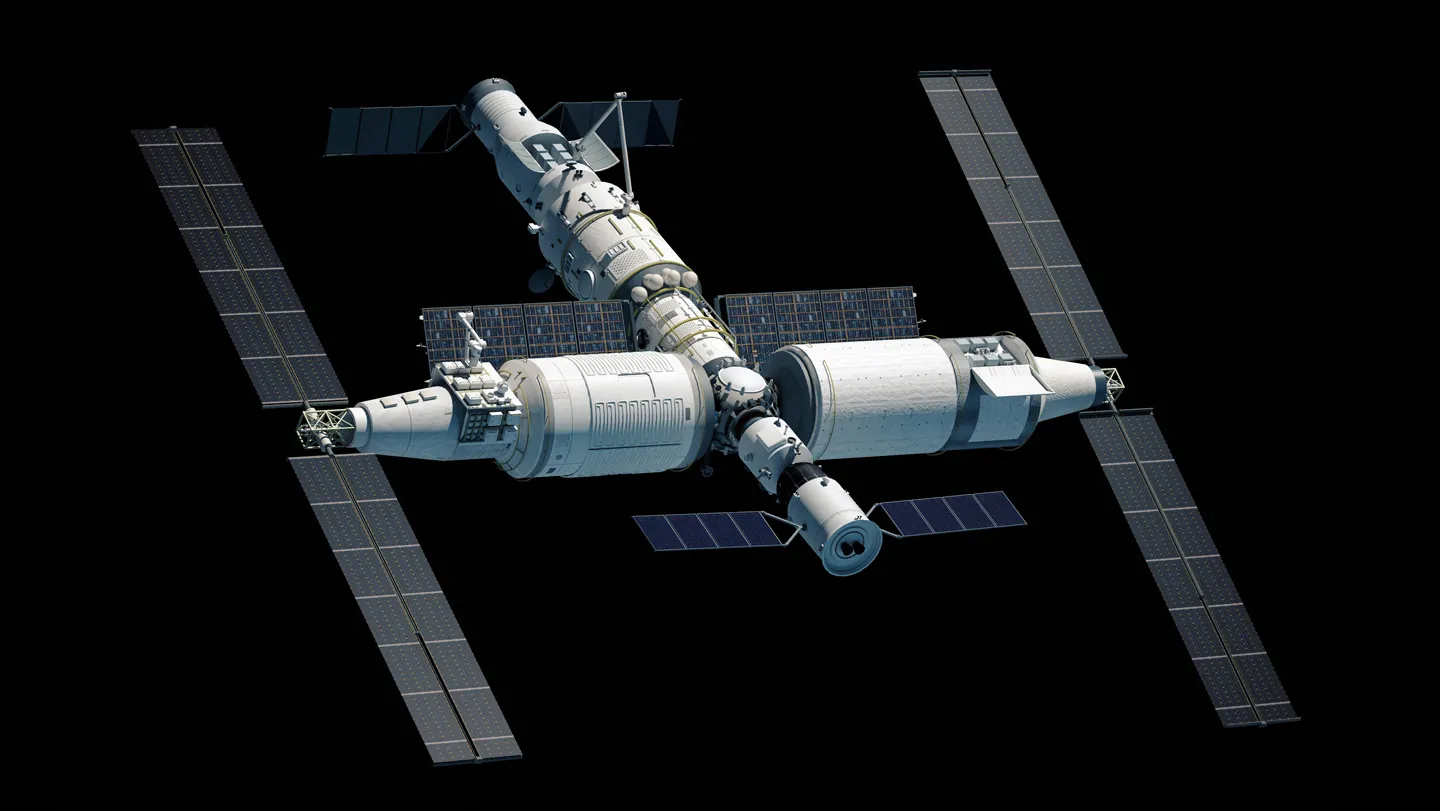
An experiment famously attributed to Galileo, where he supposedly dropped weights from the Leaning Tower of Pisa to demonstrate that objects of different masses fall at the same rate, has been replicated with atoms in orbit around Earth.
Researchers on China's Tiangong space station measured the accelerations of two clouds of cold rubidium atoms with differing masses due to variations in neutron count. The accelerations matched with remarkable precision, within 0.05 thousandths of a percent.
This experiment confirms the equivalence of gravitational mass (how an object responds to gravity) and inertial mass (how an object accelerates when a force is applied). This equivalence is a cornerstone of Albert Einstein's general theory of relativity.
While previous tests on Earth and with larger objects in space have supported the weak equivalence principle, using atoms in orbit allows for longer free-fall durations, enhancing test precision. As atoms follow quantum physics rules, this experiment verifies their behavior aligns with the principle, extending its validity to the quantum realm.
AI-samenvatting op basis van de bron.
Science News