Carbon Brief · Climate & nature
Sea Level Rise: An Existential Threat
Global sea levels are rising faster than in at least 3,000 years, primarily due to human activity. This phenomenon poses significant threats to human populations, heritage, and natural ecosystems worldwide.
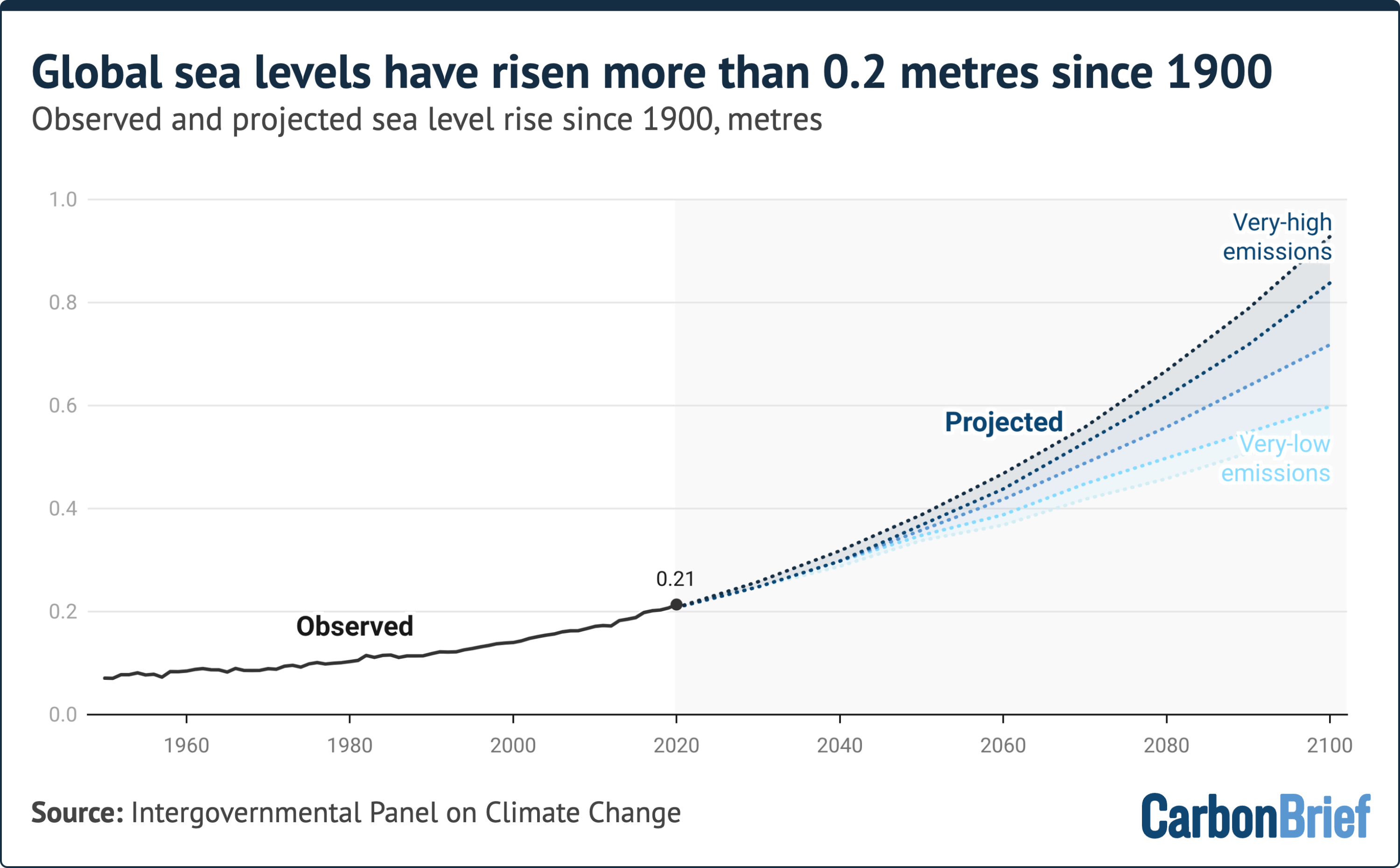
Oceans are rising 20 cm (1901-2018) due to melting ice and warming waters. Recent acceleration shows a 10.6 cm rise since 1993. Local variations occur due to land motion and seismic activity. Moderate emissions may cause a 56 cm rise by 2100.
770 million people are at risk from flooding and storm surges. Critical infrastructure is vulnerable. Saltwater intrusion threatens agriculture. Land subsidence amplifies risks, especially in Asian coastal cities.
Coastal ecosystems face "coastal squeeze" from development blocking inland migration, causing significant wetland loss. Many US coastal wetlands cannot keep pace with sea level rise and are submerging.
Small island developing states are disproportionately threatened due to low elevation. Many atoll nations have average elevations of 1-2 meters. Accretion may not keep pace with rising seas.
Coral reefs are vulnerable. Deeper water reduces light for photosynthesis, hindering growth. Erosion from degrading reefs further damages these ecosystems.
The Key Largo cactus faced extinction due to sea level rise impacts. Invasive species may colonize degraded areas. Human migration from coasts can cause secondary biodiversity impacts.
AI-samenvatting op basis van de bron.
Carbon Brief