Hackaday · Creativity & design
ESP32 as a Linux Wireless Co-processor
The esp-hosted project uses ESP32 modules as WiFi/Bluetooth cards for Linux SBCs, offering an open alternative to proprietary wireless solutions.
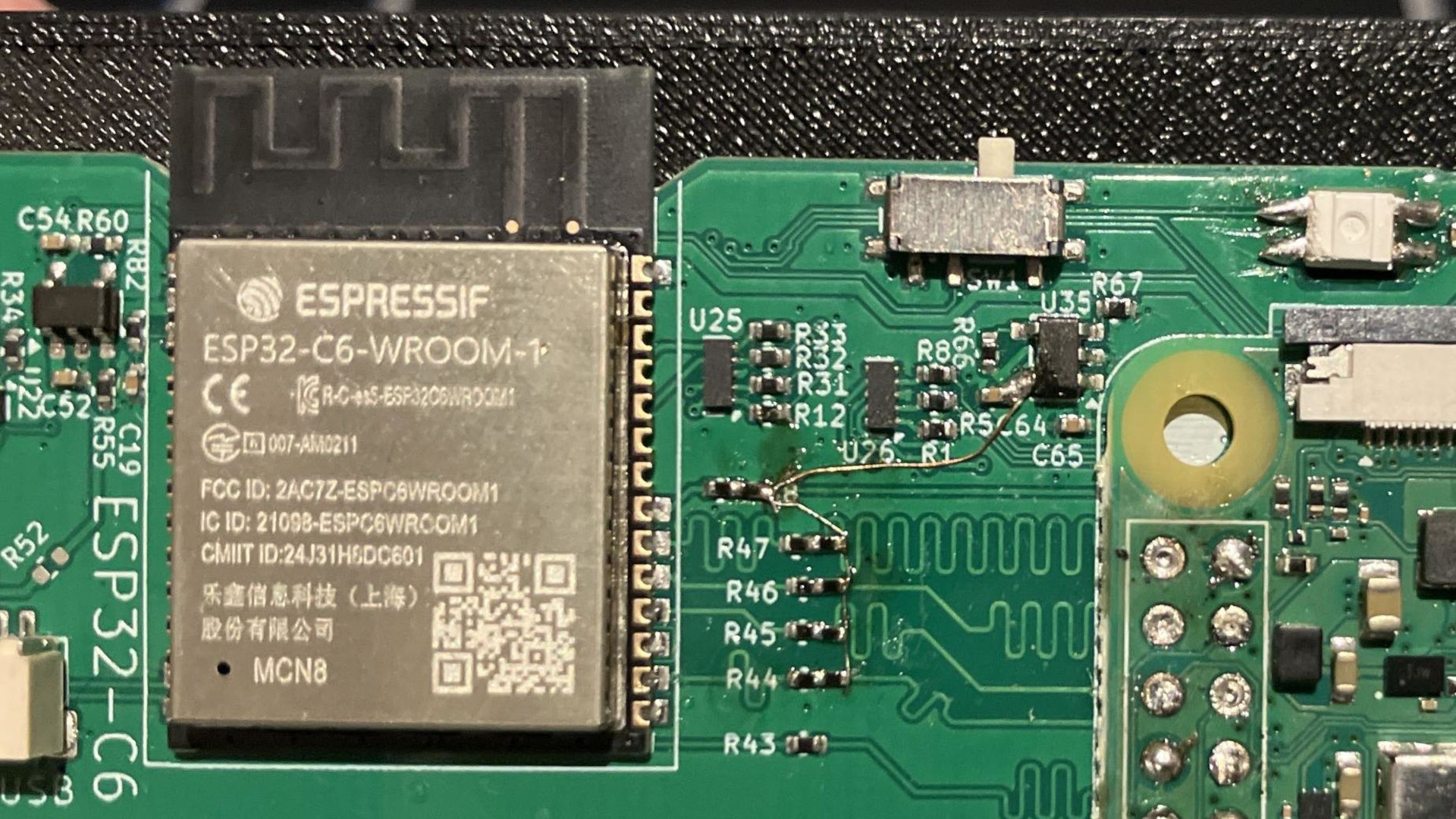
It includes esp-hosted-mcu for self-sufficient WiFi management and esp-hosted-linux, where ESP32 acts as a Linux wireless proxy.
Requires a Linux SBC with SDIO/SPI and a compatible ESP32 (e.g., ESP32-C5 for 5GHz). Connection via SDIO is faster, needing careful layout.
Setup involves freeing SBC's SDIO/SPI, flashing ESP32 firmware, and loading the Linux driver. ESP32 needs 3.3V (300-400mA) and USB for flashing.
Firmware can be compiled on a desktop or downloaded. The driver must match the firmware's git version.
The driver is compiled on the SBC. For long-term use, copy the compiled module (esp_sdio.ko) for auto-loading.
Limitations include manual driver loading after kernel upgrades and device tree integration. Throughput is around 40-50 Mbps.
Benefits include Bluetooth over SDIO, robust power switch handling, and potential for fully open-source WiFi. ESP32 can also act as a co-processor for other protocols like LoRa or Zigbee.
AI-samenvatting op basis van de bron.
Hackaday