ArchDaily · Creativity & design
Architecture Beyond Familiar Ground
Designing on water or in space requires architecture to provide its own infrastructure for energy, water, transport, and waste, as traditional urban systems are unavailable.
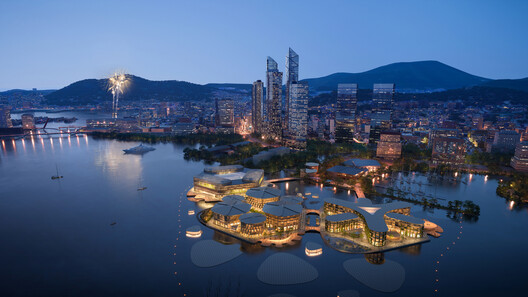
Projects in the Maldives and Busan involve building on water, responding to land vulnerability and urban expansion. Moon Village faces the challenge of no existing infrastructure.
Infrastructure becomes integral to architectural design, requiring planning for movement, resource distribution, and settlement dependencies alongside living spaces.
Maldives Floating City uses canals for transport and integrates housing with amenities. Artificial coral banks support marine life and reduce wave impact.
OCEANIX Busan expands the city onto water with platforms for living and research. Each neighborhood generates its own energy, manages water in closed loops, produces food, and handles waste internally.
Both floating projects, while connected to existing cities, adapt architecture to marine conditions, using canals and floating structures.
Building beyond conventional ground integrates normally separate systems into a single design. These projects embed systems like solar energy and local sewage treatment from the start.
SOM's Moon Village must find, produce, or reuse resources like energy and water locally, linking location, infrastructure, and habitation while addressing human needs.
AI-samenvatting op basis van de bron.
ArchDaily