NASA · Space
Understanding the Equinox
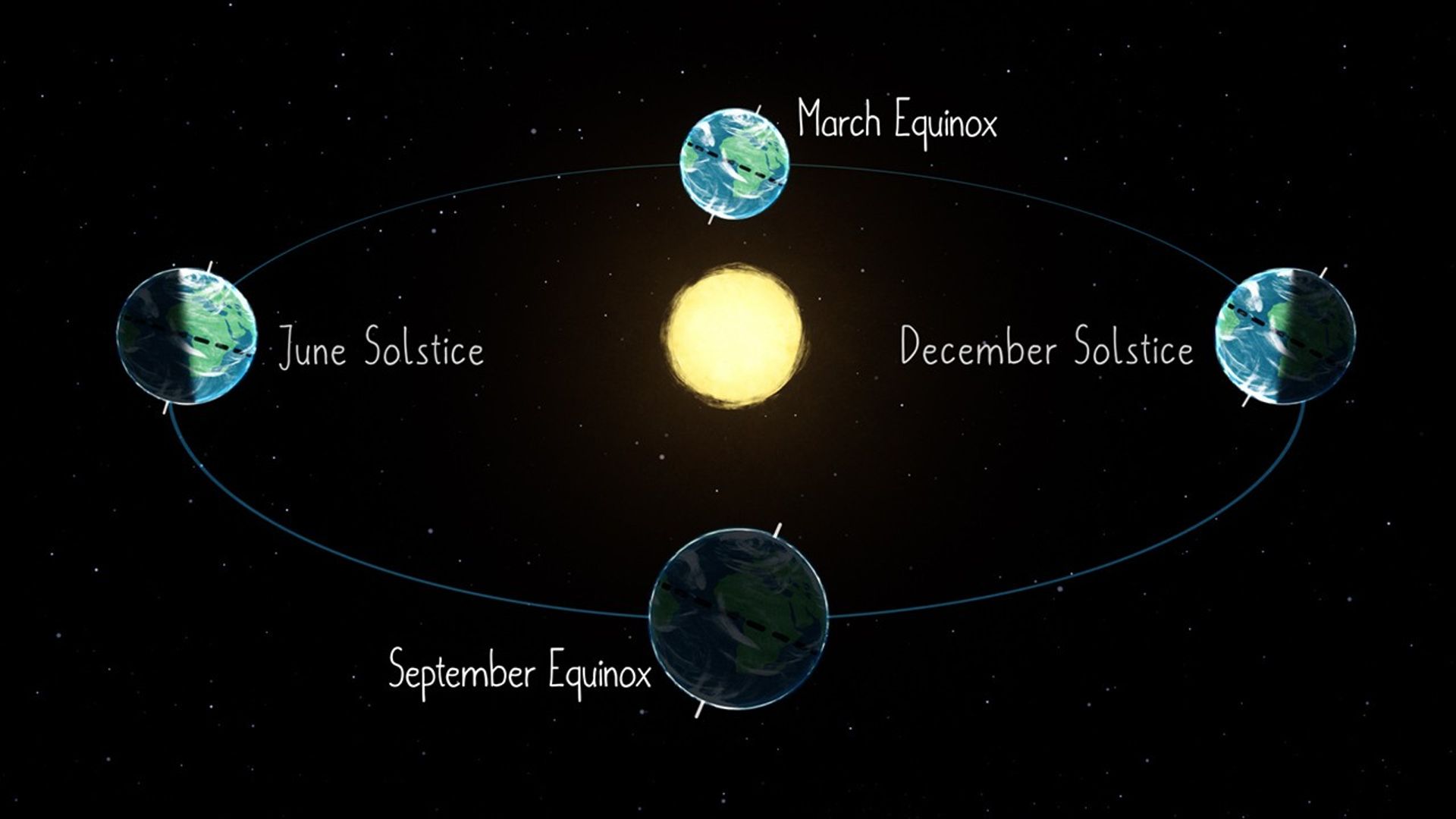
The equinox, occurring twice yearly in March and September, marks the moment the Sun crosses Earth's equatorial plane. This event signifies a near-equal distribution of sunlight between the Northern and Southern Hemispheres.
The term "equinox" derives from Latin, meaning "equal night." Historically, observing equinoxes was a key astronomical skill, with many ancient sites tracking these events alongside solstices.
In 2026, the March equinox will occur on March 20 at 14:46 UTC, and the September equinox on September 23 at 00:05 UTC. On the equinox, observers at the equator see the Sun directly overhead at noon.
Following the March equinox, the Sun's path appears to move northward until the June solstice, then southward until the December solstice. The September equinox marks its crossing back over the equatorial plane, continuing its southward journey.
During equinoxes, both Earth's North and South Poles are simultaneously illuminated by sunlight, as the Sun shines equally on both hemispheres.
The length of day and night is not precisely equal on the equinox. Atmospheric refraction and the Sun's spherical nature, rather than a point source, contribute to several extra minutes of daylight, meaning the exact day/night split varies by latitude and may not fall precisely on the equinox date.
Equinoxes are closely tied to seasonal changes. The March equinox signals spring in the Northern Hemisphere and autumn in the Southern Hemisphere, while the September equinox reverses these seasonal associations.
AI-samenvatting op basis van de bron.
NASA