Hackaday · Creativity & design
Galileo Demonstrates Spoofing Defense
Europe's Galileo satellite navigation system has successfully demonstrated a new method to counter spoofing attacks, a vulnerability that affects most current systems like GPS.
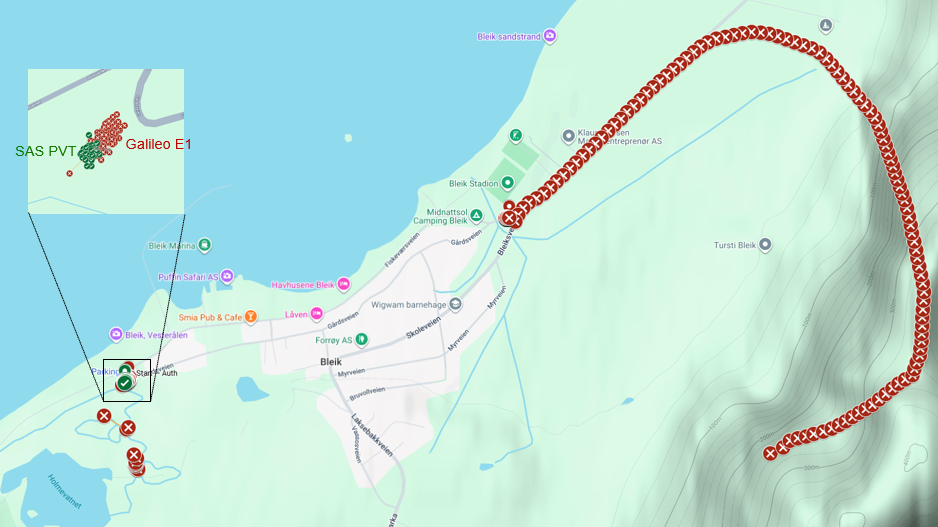
Most Global Navigation Satellite Systems (GNSS) lack verification, allowing attackers to broadcast stronger, false signals to hijack receivers. Galileo's Signal Authentication System (SAS) aims to prevent this by encrypting signal spreading codes with a regularly changing secret key, which is then published by ground stations.
Receivers can download these encrypted codes in advance. Galileo satellites transmit on the E6-C pilot signal, which receivers record. The decryption key is sent on a separate signal, allowing the receiver to recover the codes and verify the satellite's pseudorange.
During the Jammertest GNSS event in Norway, the European Space Agency used five Galileo satellites to maintain a stable receiver lock despite spoofing attempts. This technology could potentially be adapted for other GNSS systems, given the increasing threat of large-scale attacks.
AI-samenvatting op basis van de bron.
Hackaday