NASA · Space
Curiosity Rover Discovers Unusual Disc-Shaped Mineral Features
NASA's Curiosity rover has encountered a novel rock texture on Mars, characterized by small, disc-shaped mineral formations. These features, approximately 3-4 millimeters across, were observed on bedrock informally named 'Salar de Vacas'.
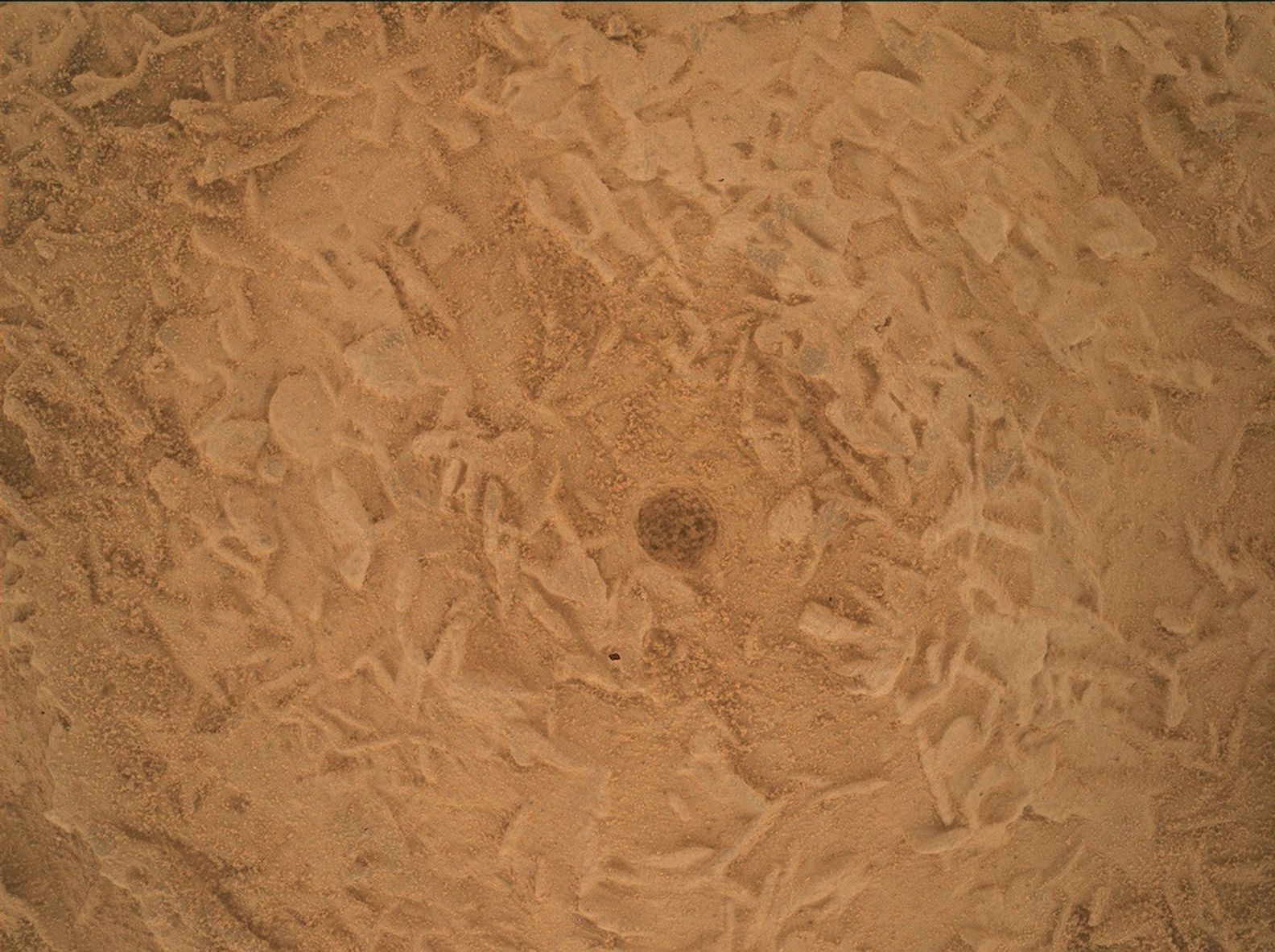
The rover's Mars Hand Lens Imager (MAHLI) captured a detailed image of these formations after brushing a spot on the bedrock. The disc-like shapes could be indicative of specific mineral growth habits or fragments of a harder rock layer.
Scientists are investigating the composition of these features using instruments like LIBS and APXS. Similar formations have been observed earlier in the mission and on Earth, often associated with mineral precipitation from evaporating fluids.
Curiosity is also continuing long-distance imaging projects to map sedimentary structures and understand erosion patterns in the surrounding buttes and Valle Grande. This data will aid in understanding the formation of these geological features.
To identify the minerals present, the rover requires data from the CheMin X-ray diffraction instrument, necessitating a drill campaign. This will be the first drill site above the erosional supersurface since the rover traveled over a kilometer.
The mission team has identified a promising drill target and is preparing for contact science and a preload test before drilling. Further analysis will follow to understand the mineralogy of the newly discovered formations.
AI-samenvatting op basis van de bron.
NASA