NASA · Space
Curiosity Rover Explores Banded Terrain on Mars
NASA's Curiosity rover is currently traversing a subtly banded area as it ascends a valley known as "Valle Grande." The rover recently passed significant milestones, including its 14th "Landiversary" and surpassing the 5000th Martian day (sol) of its mission.
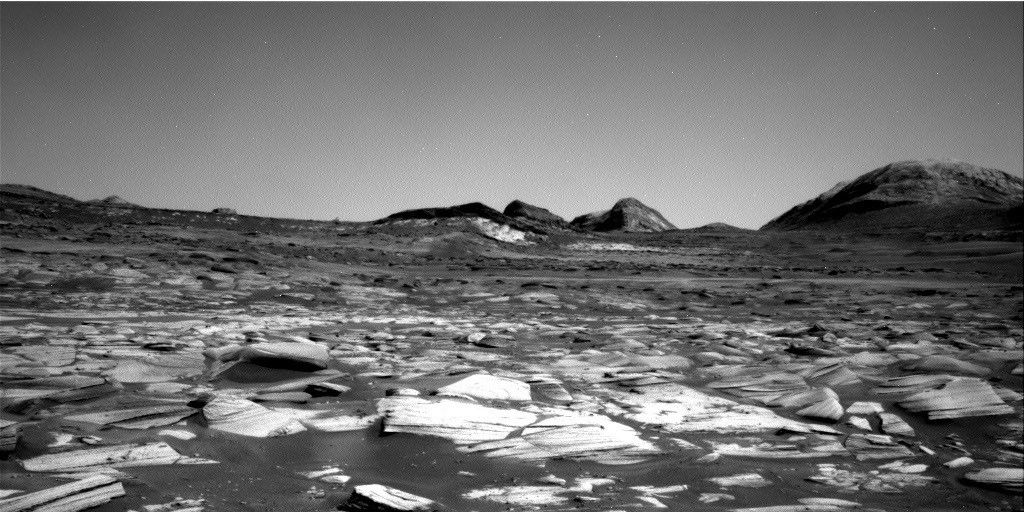
The rover is navigating terrain characterized by sparse, rough-textured outcrops surrounded by sand. Scientists are investigating nodular bedrock and dark-toned nodules and float rock using instruments like APXS, MAHLI, and ChemCam's LIBS. Some areas show laminated, smoother textures.
In addition to close-up investigations, the ChemCam and Mastcam instruments have captured large mosaics of nearby buttes and features like the "Chocolatal" scuff and the "Sullivan Field" sand field. This sand field contains various ripple formations and ridges.
The environmental team is conducting routine monitoring, including dust-devil movies, suprahorizon movies, and atmospheric dust measurements. Navigation and Mast cameras are also imaging the path ahead, noting subtle tonal differences in the banded terrain.
These bands, ranging from 25 to 200 meters in diameter, exhibit morphological changes, with some areas having more sand and fewer rocky outcrops, appearing darker from a distance. Other bands show more continuous outcrops, helping to define rough contacts between them.
AI-samenvatting op basis van de bron.
NASA