Dezeen · Creativity & design
Chromatic Architecture Highlights Radical Use of Color in Buildings
A new book, "Chromatic Architecture," by Adam Nathaniel Furman and Kate Mazade, explores color as a fundamental element in architecture, not merely decoration. The authors selected six buildings that exemplify the powerful role of color in conveying emotion, cultural understanding, and spatial perception.
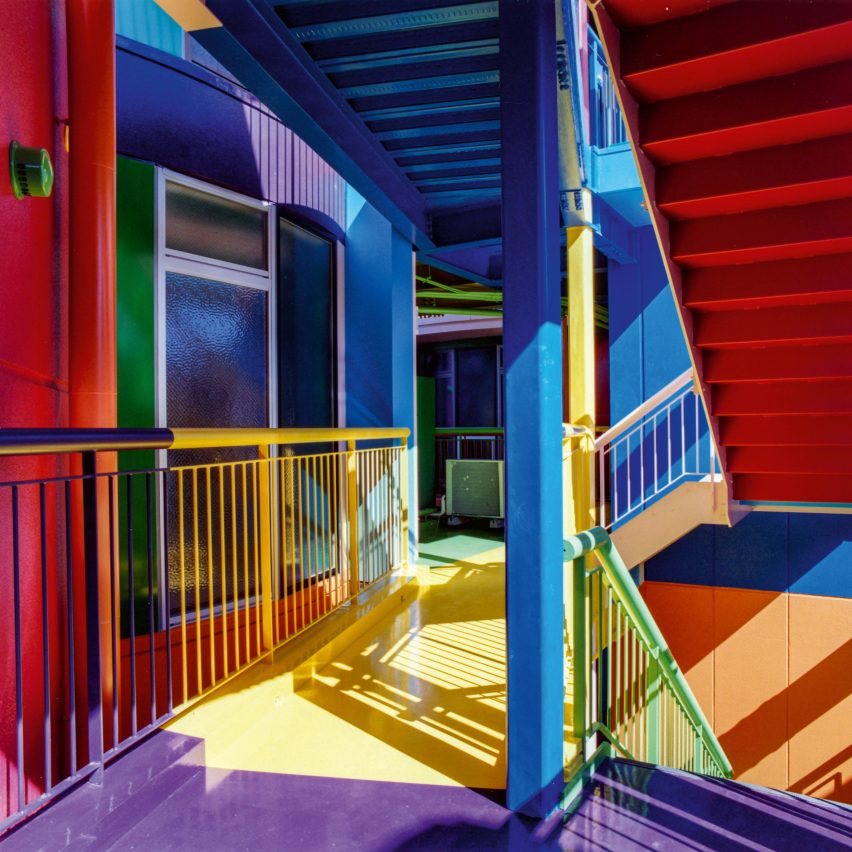
The book challenges the misconception that color diminishes a design's seriousness, showcasing how it can reveal emotional depth and cultural context. Furman and Mazade aim to encourage greater appreciation for color's impact on the built environment and provide a guide for designers.
Furman described the Shah Mosque in Iran (1629) as a reference for using glazed tiles to manipulate spatial volume and perception, creating a sense of infinite expansion. The Palau de la Música Catalana in Spain (1908) is highlighted for its masterful use of diverse materials and color to create a "jewel-box" effect.
The Guardian Building in Detroit (1929) is praised as an Art Deco polychromy masterpiece where color functions as an integral, structural element. The Reversible Destiny Lofts in Tokyo (2005) use a disorienting palette to promote inhabitant alertness and presence.
The Netherlands Institute for Sound and Vision (2006) demonstrates how colored glass can create an intense yet sophisticated effect on a large scale. Furman's own project, Croydon Colonnade (2023), uses handmade ceramics to bring vibrant, tactile color to the public realm, aiming to transform urban spaces into moments of joy.
AI-samenvatting op basis van de bron.
Dezeen