ArchDaily · Architectuur
USINA and Collective Construction in Brazil: A Political Practice
The article explores USINA—Centro de Trabalhos para o Ambiente Habitado (USINA CTAH), a Brazilian group that has spent over three decades engaged in social housing and self-management. It contrasts this with the historical separation of design and construction, highlighting how collective building processes can be spaces for learning and shared decision-making.
The historical separation between drawing and building, solidified during the Renaissance, intensified with industrialization, fragmenting the construction process and concentrating knowledge and power. Collective construction experiences like mutirões (collective self-build) and cooperatives offer a renewed relevance by making the building process a site for learning and collective production, rather than a mere execution of a design.
USINA, founded in São Paulo in the early 1990s, brings together architects, engineers, and social scientists to facilitate resident participation in housing production. This model redefines the architect's role from a sole designer to a negotiator within an ongoing process, translating technical information for collective discussion. Future residents engage in decision-making and construction through mutirões, where families contribute labor and organizational efforts, expanding their learning and decision-making capabilities beyond just providing manual work.
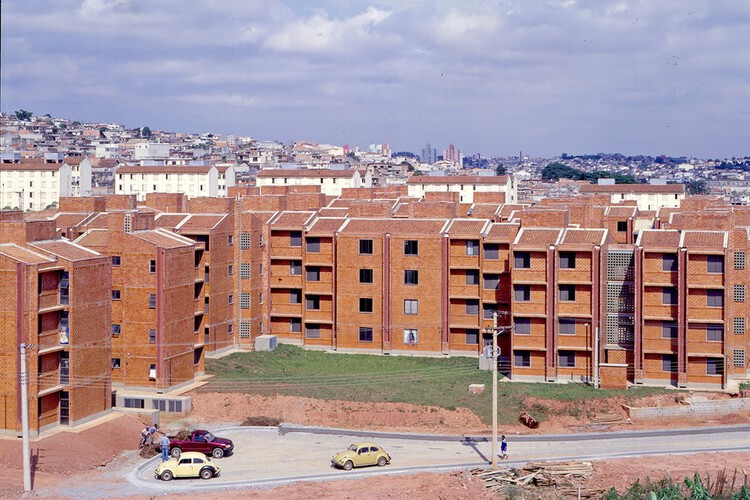
USINA's approach has led to the design and construction of over 5,000 housing units and community facilities, including large-scale projects like COPROMO with 1,000 apartments. These developments, often built using methods like self-supporting ceramic blocks or multi-level steel structures, challenge the notion that collective construction is limited to small-scale or technically unsophisticated projects. The appropriation of advanced technologies in self-managed sites aims to enhance quality, expand collective spaces, and reduce physical strain.
In mutirões, technical knowledge circulates and is retained within the group. For instance, at COPROMO, participants established a metalworking workshop to produce staircases, gaining skills and reducing external dependency. This 'craft dimension' of collective construction lies in the dynamic relationship between knowledge and materials, where participants learn through direct experience, problem-solving, and adaptation.
While collective construction may be slower than conventional development due to reliance on participant labor and collective decision-making, evaluating it solely on speed overlooks acquired knowledge, formed support networks, and collective capacity. The Mutirão União da Juta project, for example, saw participants gain technical skills in various trades, some leading to paid employment, and develop expertise in resource management and group organization, demonstrating the building site's function as a space for practical training.
USINA's experience is part of a broader Latin American history of cooperative housing, such as Uruguay's FUCVAM. By rejecting the idea that professional knowledge is the sole legitimate form of construction knowledge, USINA's mutirões represent a political practice that integrates diverse agents and knowledge forms. They question who controls building knowledge and what a building process can produce beyond the physical structure, emphasizing that the house embodies the relationships, knowledge, and decisions involved in its creation.
AI-samenvatting op basis van de bron.
ArchDaily