ArchDaily · Creativity & design
Brutalist Asia Publication Reframes Architectural History
A new publication, Brutalist Asia, explores the architectural style's evolution across the continent, challenging Western-centric narratives. It examines how Asian architects adapted Brutalism to local conditions.
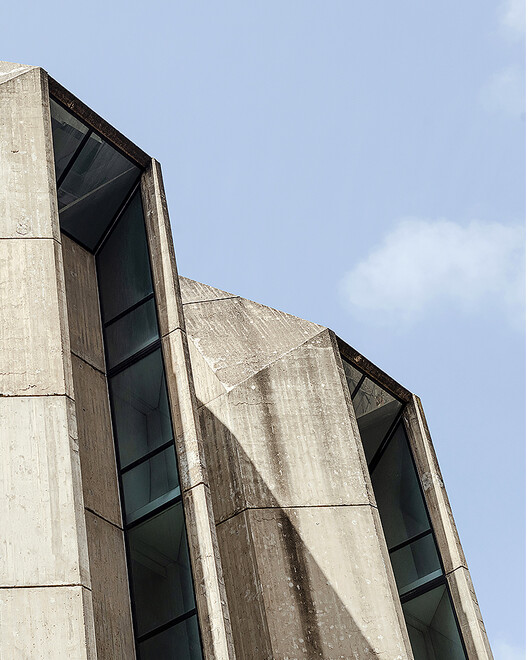
The book features 140 buildings and over 150 photographs from 28 countries, including works by renowned architects like Kenzo Tange and Balkrishna V. Doshi, alongside lesser-known structures. It highlights how Brutalism, peaking in the mid-1970s, was interpreted differently across regions, often tied to nation-building and identity in the Arab world.
In Lebanon, Brutalism emerged in the 1960s, influenced by Le Corbusier and Brazilian Modernism. Local architects used exposed concrete, symbolizing progress. Reinforced concrete had become dominant, seen by some as a modern equivalent to traditional stone.
Lebanese Brutalism blended Modernist ideals with regional identity and climate responsiveness. However, the 1975 Civil War halted this architectural trajectory, leaving many projects unfinished and symbolizing an interrupted modern vision.
The Interdesign Building, designed by Khalil Khoury in 1973, exemplifies Lebanese Brutalism with its exposed concrete and monumental form. It was conceived as a showroom for Khoury's furniture industry, merging architecture, design, and manufacturing.
Construction halted in 1975 due to the Civil War. By the time it was completed in the late 1990s, the economic context had shifted, making the original purpose irrelevant. The building, difficult to adapt, stands as a symbol of an interrupted modern project.
AI-samenvatting op basis van de bron.
ArchDaily