NASA · Space
Western Australia's Outback Blooms Extravagantly
Arid shrublands in Western Australia experienced an exceptional wildflower bloom in late winter 2026, transforming the landscape with vibrant colors. This event is attributed to several months of above-average rainfall.
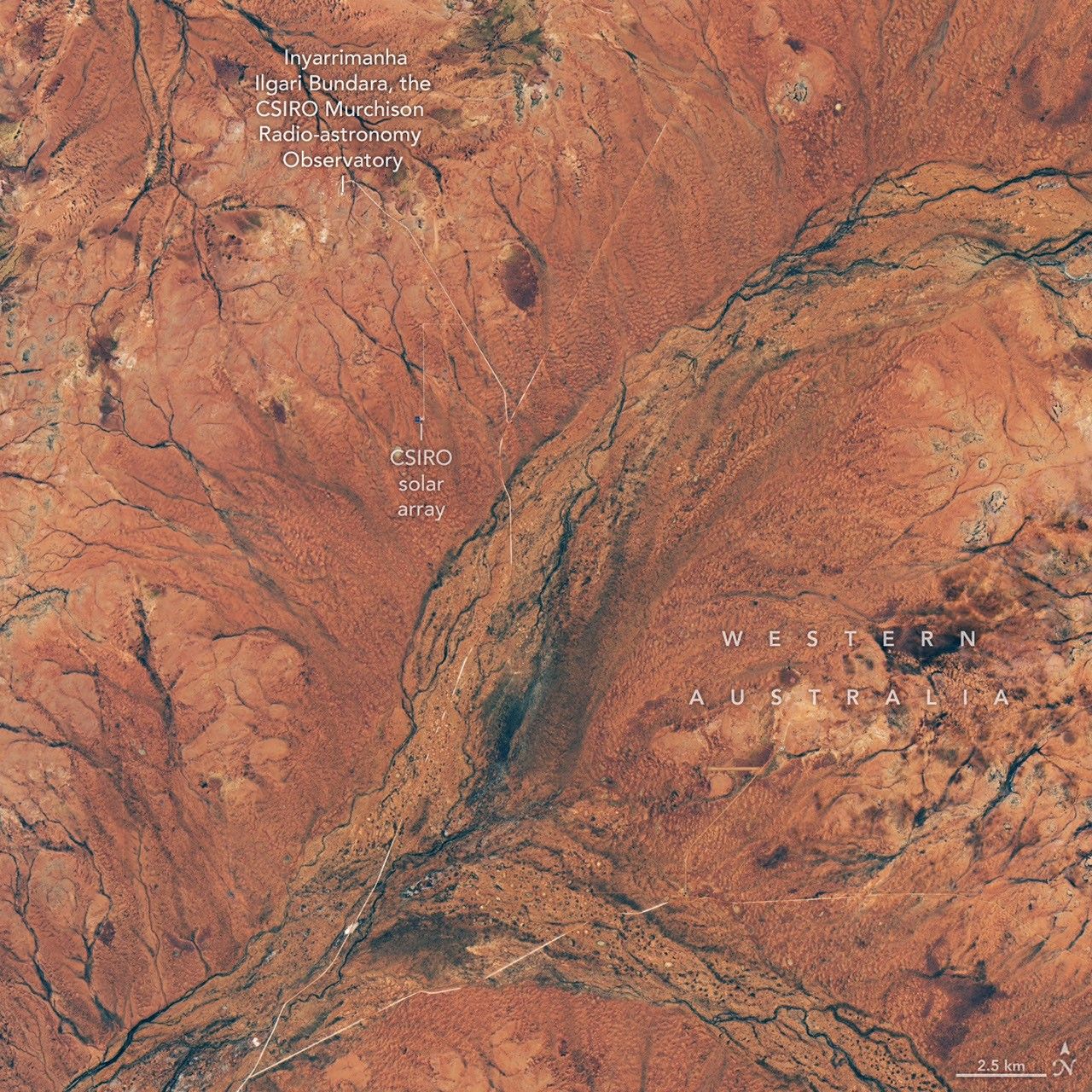
Dormant seeds germinated after wetter-than-normal conditions earlier in the year, creating extensive carpets of flowers. Local experts suggest this display might be the most significant in nearly two decades. NASA's Landsat 8 satellite captured images comparing the verdant landscape of August 2026 with a drier August 2025.
The affected area is in the Murchison region, north of Perth, a key grazing area for sheep and cattle. The region's typical vegetation includes grasses, saltbush, and mulga trees. The 2026 rainfall was above average in June and significantly above average in August, influenced by cold fronts.
The rains stimulated a diverse array of wildflowers, including some threatened species, across the outback. This bloom occurred even at the Commonwealth Scientific and Industrial Research Organisation's (CSIRO) Murchison Radio-astronomy Observatory, where wildflowers were monitored on their land.
While the wildflowers were notable, the CSIRO Murchison site's primary focus remains astronomical observation using antenna arrays to study the southern sky. The observatory is situated in a designated 'radio quiet' zone to minimize interference with its instruments.
CSIRO's radio telescopes have a history of supporting NASA missions, from tracking early planetary probes like Mariner 2 in 1962 to receiving signals from the Apollo 11 moon landing in 1969. They also support current interplanetary missions through the Deep Space Network.
AI-samenvatting op basis van de bron.
NASA