ArchDaily · Creativity & design
Imagining the Climate Transition: Beyond Catastrophe and Utopia
While we are adept at envisioning climate catastrophe or utopian technological futures, our capacity to imagine the complex, decades-long transition between them is underdeveloped. This transition, crucial for climate action, involves gradual adaptation, repair, and restoration rather than singular breakthroughs.
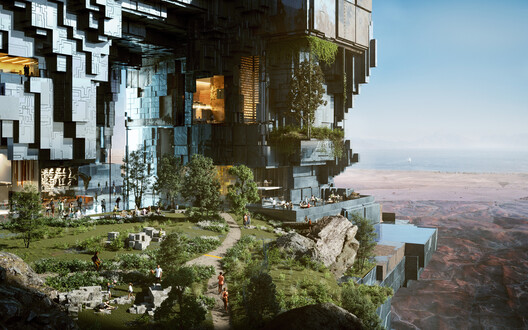
Familiar narratives depict climate catastrophe or advanced technological futures, offering clear 'before' and 'after' scenarios but neglecting the messy, incremental process of change.
The climate transition requires a different imagination, embracing distributed agency across sectors and generations. It focuses on the accumulation of ordinary decisions in adaptation and resilience.
Technology is vital, but a 'technological rescue' preserving contemporary life is a fantasy. Visions like smart cities can overlook deeper issues of consumption and existing urban fabric.
Many narratives expand where technology might overcome environmental limits. The challenge is to direct creative attention toward adaptation, reuse, and resilience.
Most climate transition work occurs within the existing physical world: adapting, repairing, and maintaining buildings and neighborhoods. This incremental progress leads to systemic change.
Designers visualize futures as destinations. Shifting focus to the process of change over time—what remains, what becomes obsolete—can make the transition itself a subject of speculation.
By grounding climate optimism in the inherited world, designers can direct ambition toward the transition. This values adaptation and resilience alongside technological speculation.
AI-samenvatting op basis van de bron.
ArchDaily