NASA · Space
Arctic Sea Ice Reaches 2026 Minimum, Tying Past Records
Arctic sea ice reached its annual minimum extent on September 12, 2026, covering an estimated 4.6 million square kilometers. This extent ties several past years for the 10th-lowest minimum recorded since satellite observations began in 1978.
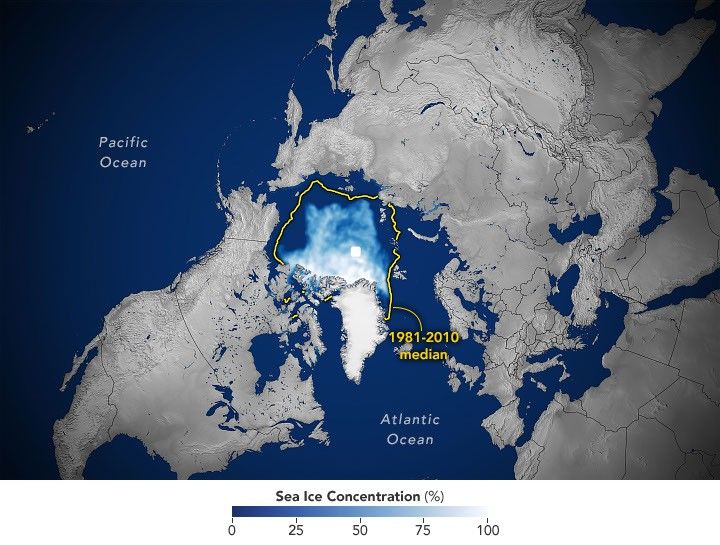
While sea ice extent has declined overall, the downward trend steepened in the 2000s, leading to a series of record and near-record lows. Each of the past 20 summers, from 2007 through 2026, ranks among the 20 lowest minimum extents. The lowest minimum occurred in September 2012.
Despite a recent plateau in summer minimums, partly due to increased cloud cover reducing sunlight, the extent remains well below the long-term average. The ice that remains is younger and thinner, with a decline in multiyear ice.
Winter ice is also shrinking, with the March 2026 maximum extent tying the 2025 maximum for the lowest on record. Natural variability plays a role, but the observed decline is attributed to a combination of natural variability and rising global temperatures.
Scientists project that the Arctic could be essentially ice-free at least once before the mid-21st century.
Sea ice extent is monitored using passive microwave sensors on satellites, which can observe ice regardless of weather conditions. Data collection began in 1978 and has involved multiple satellites over the years, with new instruments contributing since 2025.
AI-samenvatting op basis van de bron.
NASA