NASA · Space
Arctic Melt Season Length Stabilizes After Decades of Lengthening
A NASA-led study reveals that the Arctic sea ice melt season, which had been lengthening significantly since satellite records began, has unexpectedly stabilized around 2010. The melt season is now approximately 40 days longer than in 1979, with most of the increase occurring before 2010.
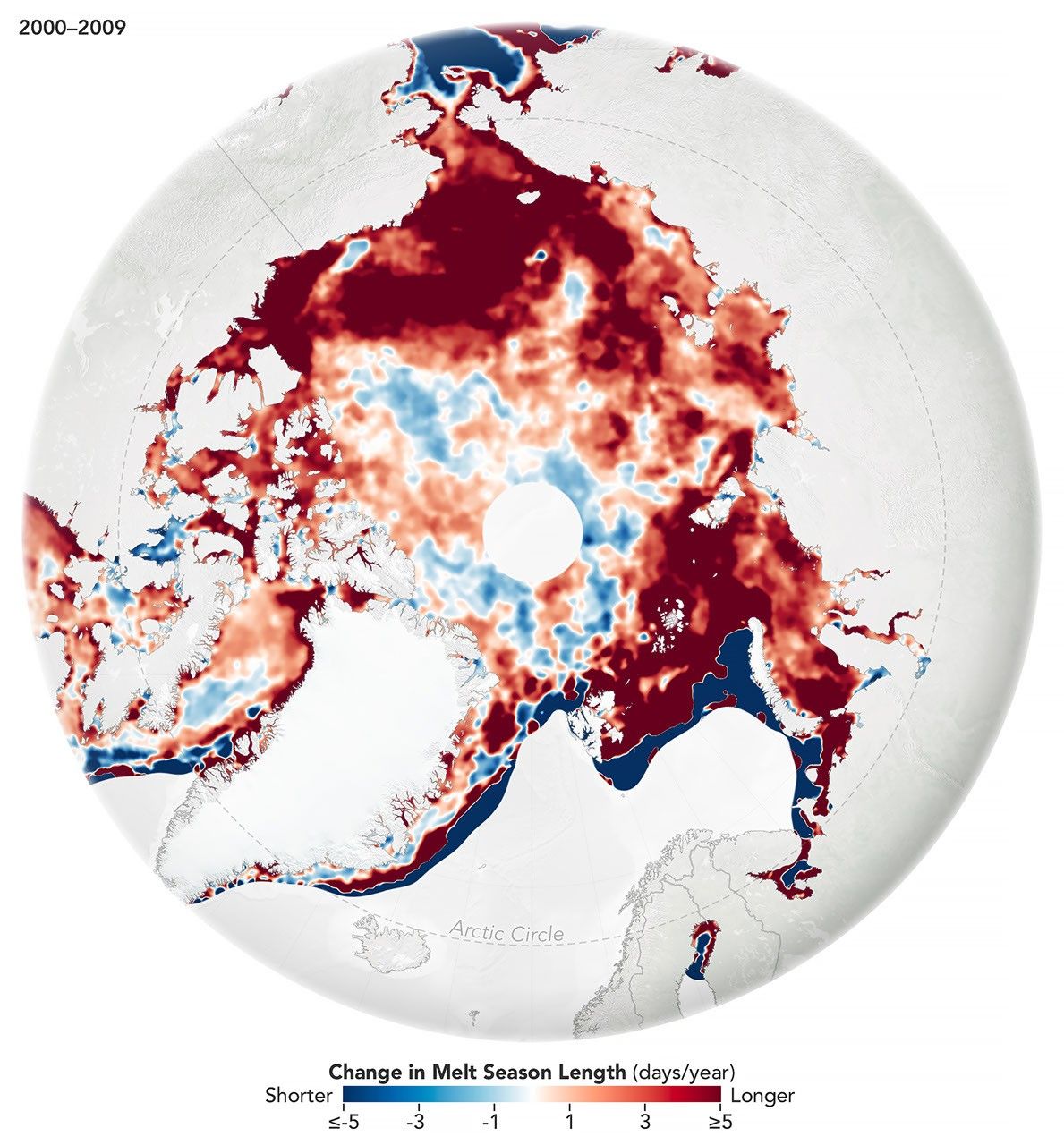
Researchers analyzed satellite data from 1979 to 2023, finding that the stabilization is primarily due to later freezing in the fall, rather than earlier melting in the spring. The shift is linked to changes in Arctic ice, which is now thinner and more variable, making it more susceptible to atmospheric conditions.
During the 2000s, reduced ice cover exposed darker ocean water, increasing sunlight absorption and delaying freezing. This energy imbalance extended the melt season. The study notes that the Arctic continues to warm nearly four times faster than the global average, and remaining ice is thinner.
Since 2010, altered cloud patterns have reduced sunlight in some Arctic areas, leading to a melt season that fluctuates annually but remains stable over longer periods. This suggests the Arctic may be entering a new phase where weather patterns have a greater influence on melt season length.
Scientists caution that this stabilization might be temporary. The existence of thick, year-round ice in certain regions could lead to another period of rapid ice loss and extended melt seasons if this ice continues to thin. Continued satellite monitoring is crucial to understand these changes.
AI-samenvatting op basis van de bron.
NASA