ArchDaily · Creativity & design
Lessons from Yacht Design for Space, Materials, and Spacecraft
Designing for yachts, which are constantly in motion and subject to harsh marine conditions, presents unique architectural challenges that offer insights applicable to other fields, including space exploration.
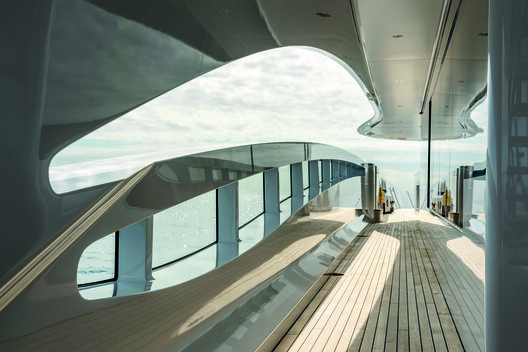
Yachts, unlike static buildings, must accommodate constant movement, changing light, and high humidity. This requires naval architects and designers to create calm interiors within a dynamic environment, balancing hydrodynamics, structure, and interior planning.
Naval architecture involves organizing circulation, structure, and daylight while managing buoyancy and weight distribution. Every element, from furniture to technical equipment, impacts the vessel's stability and performance.
Materials used on yachts must withstand salt, moisture, UV exposure, and vibration. This necessitates careful selection of woods, stone, metals, and textiles that are both durable and aesthetically pleasing.
Spatial efficiency is crucial on yachts due to limited space. Designs often incorporate built-in elements and custom joinery to maximize living areas and maintain open circulation, as seen in the REN 62 motor yacht.
Material selection on yachts prioritizes performance and weight alongside craftsmanship. The Santosha yacht, for example, uses dark timber, leather, and brushed metals to create a specific atmosphere while remaining visually connected to the landscape.
Yacht design emphasizes blurring the lines between interior and exterior. Features like floor-to-ceiling glazing and terraces, as on the Ocean Z, connect the living spaces with the surrounding water and landscape.
Ultimately, yacht design integrates structure, materials, light, and interior planning to create functional and aesthetically balanced spaces. This approach, driven by constraints, offers valuable lessons for designing in challenging environments, including space.
AI-samenvatting op basis van de bron.
ArchDaily