ArchDaily · Creativity & design
Temporary Installations as Architectural Heterotopias
The concept of heterotopia, as defined by Michel Foucault, refers to real-world spaces that manifest alternative realities and operate under their own logic. Temporary architectural installations serve as tangible examples of these heterotopias, acting as critical tools for reimagining dominant paradigms.
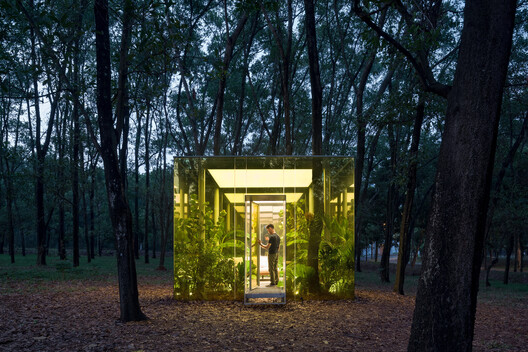
These installations function as sanctuaries or refuges, intentionally detaching from conventional norms to explore primal living or provoke perceptual shifts. They allow architects to materialize distinct worldviews and serve as experimental grounds for those who extend their practice beyond permanent construction.
The 'Room' installation by Tamara Wibowo Architects explores duality and the boundary between nature and the built environment, challenging binary understandings of space and perception.
Syn Architects' 'When the Earth Began to Look at Itself' installation draws on the 'nomadic subject' concept, encouraging a non-fixed way of knowing and fostering new relationships between subjects and objects.
Umeå School of Architecture's 'The Waterfall that Went Silent' is a sound installation reflecting on the loss of natural and cultural environments due to technological progress and resource demands, specifically referencing a silenced waterfall in Laponia.
Erazo Pugliese's 'Vessel' installation invites visitors to experience their proximity to nature and the horizon, highlighting the impact of wind and framing views to re-establish the relationship between human artifacts and the landscape.
Stephanie Deumer's 'Under the Same Sun' installation uses projected live-feed footage and solar panels to explore biological reproduction and immersive environments, creating a mirage-like sanctuary powered by the sun.
AI-samenvatting op basis van de bron.
ArchDaily