Atlas Obscura · People & society
Antimonuments in Mexico City
In Mexico City, antimonuments serve as powerful symbols of protest against state failures and human rights violations, reflecting a long history of civilian activism.
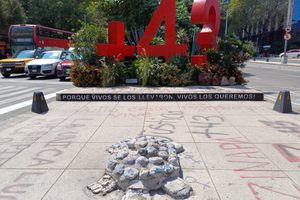
These antimonuments confront authorities and society regarding issues like the rule of law, corruption, and negligence. They represent over half a century of struggle, referencing events such as the 1968 Tlatelolco Massacre and the 1971 Halconazo.
The former Glorieta de Colón (Columbus Roundabout) was renamed Glorieta de las Mujeres que Luchan (Roundabout of Fighting Women) after a statue was toppled during a protest against femicides. A purple cutout of a woman with a raised fist was installed in its place.
The term 'antimonumenta' reflects a linguistic activism related to feminism and gender identity, feminizing traditionally male nouns like 'monumento' to 'monumenta'.
A common style of antimonuments features a plus sign followed by a number, representing the number of victims in a specific incident. These aim to humanize victims rather than just acknowledge them as casualties.
Examples include '+43' for the disappeared students near Ayotzinapa in 2014, '+72' for migrants massacred in 2010, and '+65' for workers who died in the 2006 Pasta de Conchos mining incident.
AI-samenvatting op basis van de bron.
Atlas Obscura