Carbon Brief · Climate & nature
India's Power Sector Emissions Flatline Amid Clean Energy Surge
India's power sector saw no CO2 emissions growth from early 2024 to mid-2026, as clean energy met all rising electricity demand. This marks the first time in over 50 years that coal power has not grown over a two-year period.
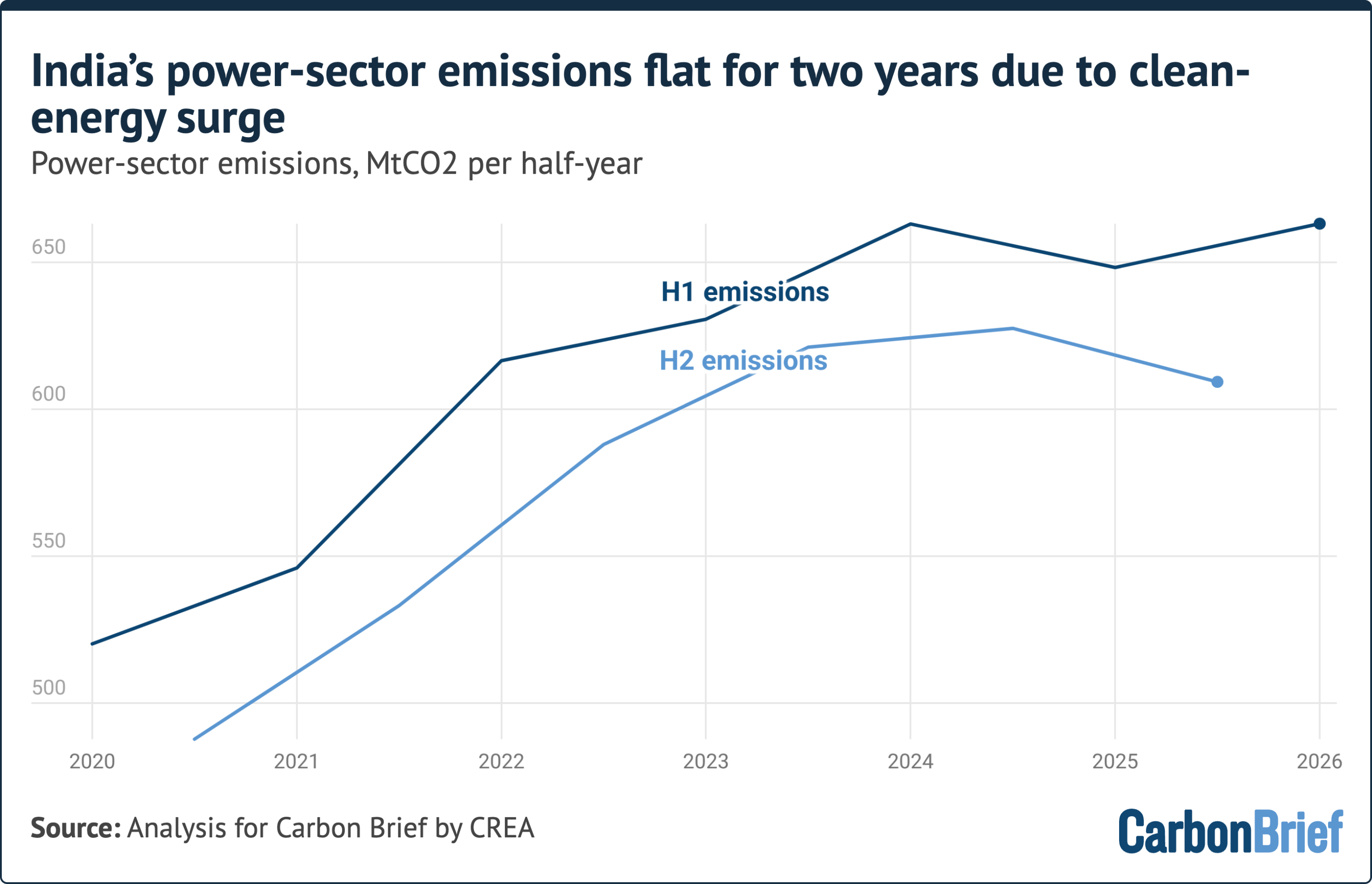
Clean energy, mainly solar, covered the 7% electricity demand rise, adding 63 TWh. Overall emissions grew 3.7% in early 2026, driven by steel and cement industries.
Fossil fuel generation remained stable, but 8.5 GW of new coal capacity was added. CO2 emissions from oil and gas fell for the second consecutive year.
Steel and cement emissions grew 8% year-on-year, now comprising 23% of India's total CO2. This industrial growth contrasts with the power sector's flat emissions.
Oil consumption decreased 1.3% in early 2026, with falling LPG and petcoke use, though diesel and petrol rose. Aviation fuel demand slowed due to global disruptions.
Heavy industries, steel and cement, saw rapid emission growth (8% and 9%). This is partly supported by real estate investments, despite rising input prices.
Despite clean energy growth, coal investments continue, including new power capacity and coal gasification. India's industrial sector has low electrification, offering emission reduction potential.
Sustaining clean energy requires grid upgrades, energy storage, and flexible coal power. Industrial electrification is key to prevent rising output from increasing fossil fuel use.
AI-samenvatting op basis van de bron.
Carbon Brief