Carbon Brief · Climate & nature
Global Fossil-Fuel Emissions to Fall in 2026 Amid Hormuz Crisis
Global fossil-fuel emissions are projected to decrease by about 0.5% in 2026 due to fallout from the Hormuz crisis, according to Carbon Brief analysis.
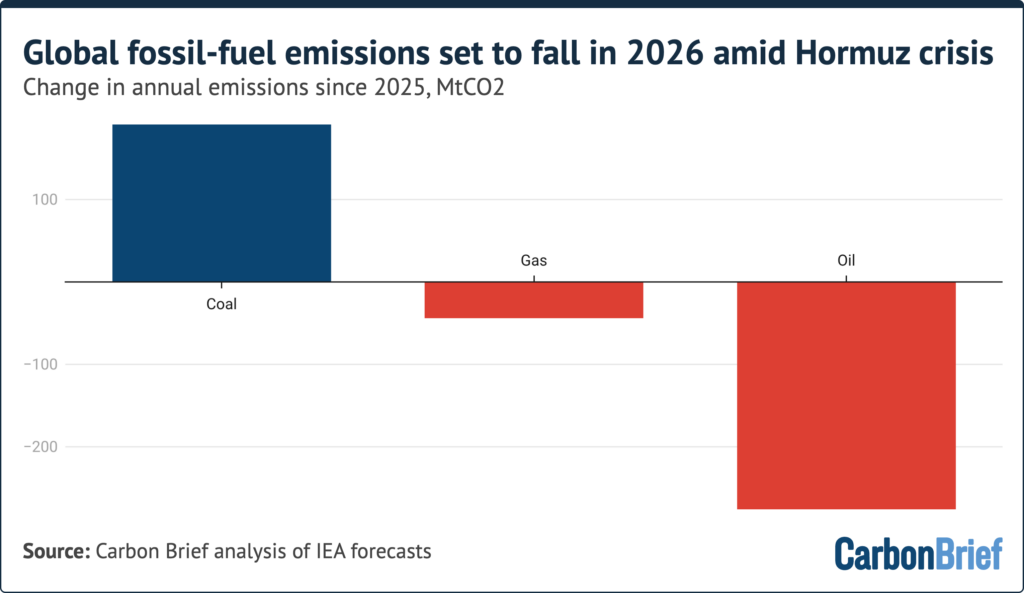
The crisis has disrupted trade, spiking oil and gas prices and incentivizing a switch to alternatives. Coal demand is forecast to rise 1.2% in 2026, but this is expected to be offset by declines in oil and gas emissions.
The International Energy Agency (IEA) forecasts are based on the ongoing energy crisis. An updated IEA report shows global coal demand rising 1.2% in 2026, up from previous expectations of a small decline, citing higher gas prices.
However, few countries can switch from gas to coal at scale. The IEA's most recent forecast for gas shows a 0.6% drop in demand in 2026, with pressure from high prices growing.
Oil demand forecasts have shifted dramatically. The IEA now forecasts a 2,500,000bpd drop in oil demand in 2026, a reduction of 2.4% from 2025 levels, down from an earlier forecast of a rise.
The energy crisis is impacting fossil-fuel demand beyond 2026. Oil demand is now expected to be flat for two years, questioning previous predictions of a peak demand in 2030.
Rising fuel prices have boosted electric vehicle (EV) sales in major markets. The crisis could lead to lasting reductions in fossil-fuel use, with some governments favoring domestic clean energy over LNG imports.
AI-samenvatting op basis van de bron.
Carbon Brief