NASA · Space
Anak Krakatau Eruption Disrupts Flights and Air Quality
Anak Krakatau, a volcano between Java and Sumatra, experienced a significant eruption in early September 2026, releasing ash and gases that impacted air travel and local air quality.
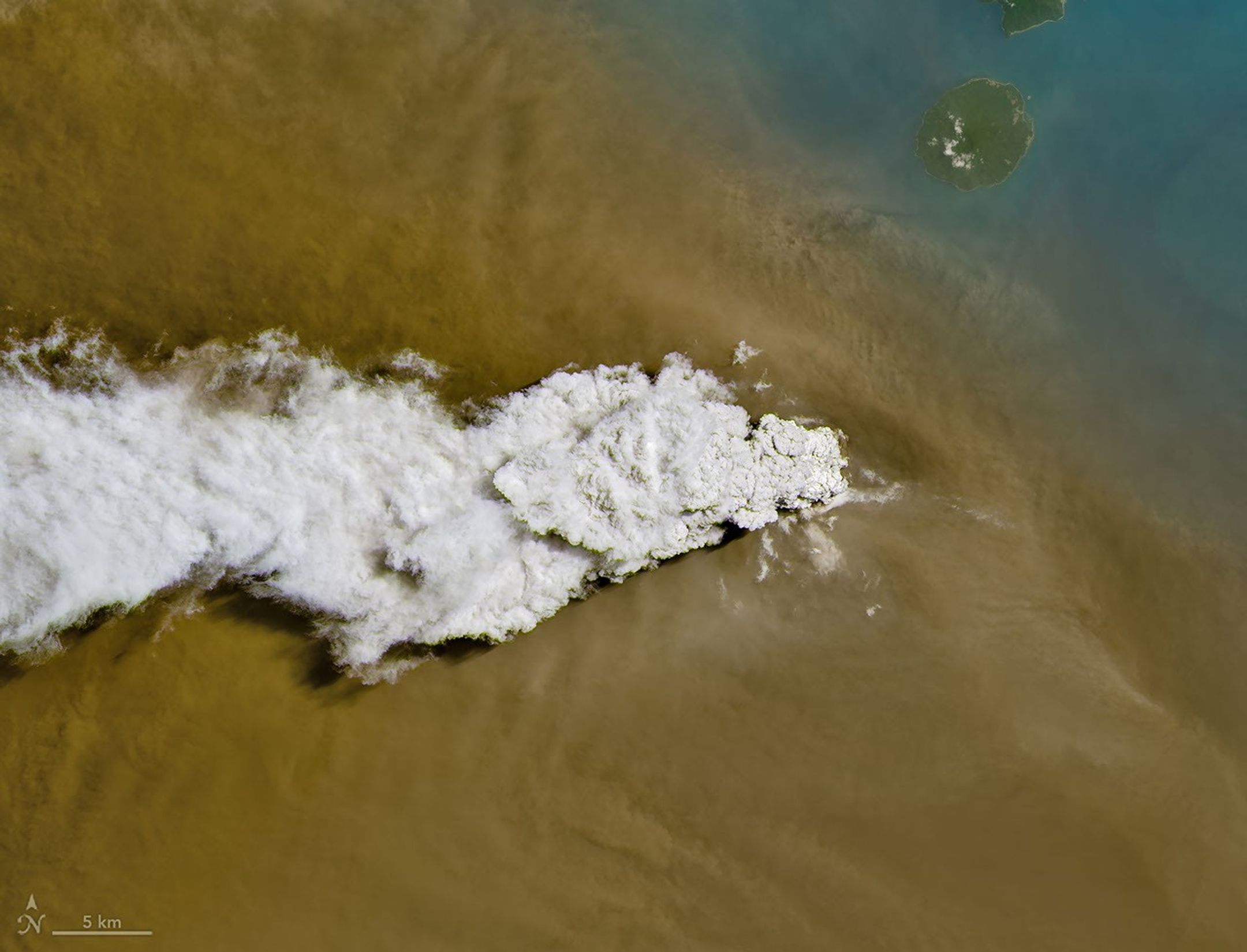
The eruption, lasting over 24 hours, sent ash clouds up to 15,000 meters (50,000 feet) high, leading to the temporary closure of eight airports on Java and Sumatra and disrupting nearly 3,000 flights. Satellite imagery captured the extent of the volcanic plume and ash dispersal over Indonesia and the Indian Ocean.
Ashfall affected populated areas, particularly Jakarta and West Java, posing health risks such as respiratory irritation. The Indonesian Humanitarian Coordination Platform noted that volcanic ash hazards differ from those of peatland fires.
By September 6, the explosive eruption subsided, with the volcano returning to a pattern of Strombolian eruptions. Airports reopened by September 8, but Anak Krakatau remained at the second-highest alert level, a status it has held since early July.
AI-samenvatting op basis van de bron.
NASA