NASA · Space
Early Fall Colors Emerge in Canadian Arctic
While much of North America experienced summer heat, the tundra and subarctic regions of Nunavut, Canada, showed early signs of autumn color in September 2026. Landsat 9 captured images revealing the seasonal shift in vegetation.
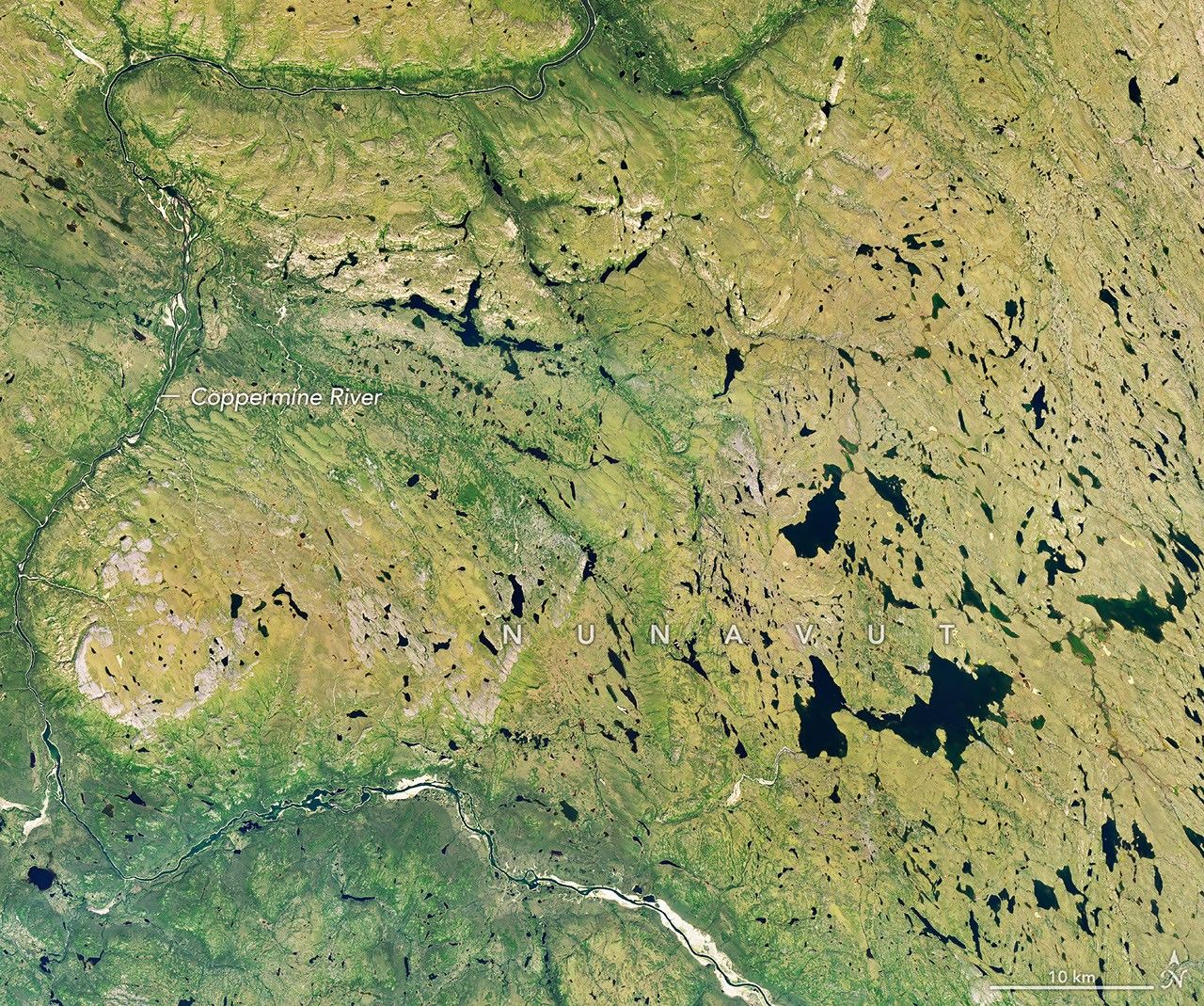
On September 6, 2026, Landsat 9's OLI captured the Coppermine River in Nunavut, Canada, winding through low-growing shrubs and tundra vegetation displaying autumn colors. A comparison image from July 27, 2026, shows the same area still green.
The region is known for its willow, birch shrubs, blueberries, and bearberries, which turn red, orange, and yellow in the fall. Satellite data analysis indicates that foliage change begins in early September and peaks mid-month, making this one of the first areas in North America to exhibit fall colors.
However, these northerly regions tend to have shorter peak color periods, sometimes lasting a week or less, compared to lower-latitude areas.
Leaf color change occurs as chlorophyll, responsible for the green color and food synthesis, degrades due to shorter days and cooler temperatures. This allows other pigments, carotenoids (yellow) and anthocyanins (red), to become visible.
Citizen scientists can contribute to tracking fall color and understanding plant responses to environmental changes through NASA's GLOBE North American Phenology Campaign, by observing and recording leaf color changes.
AI-samenvatting op basis van de bron.
NASA