ArchDaily · Creativity & design
Amman Architecture: A City Shaped by Migration and Stone
Amman's rapid growth is marked by successive waves of migration and a distinctive architectural style dominated by locally quarried limestone.
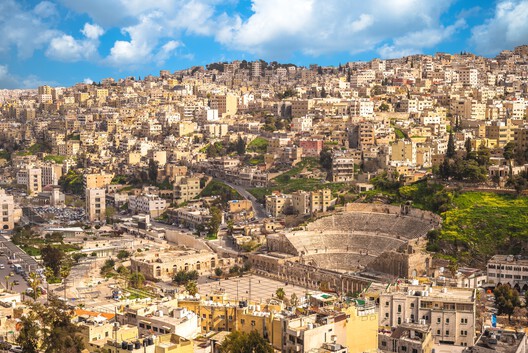
The city's development has been influenced by various migrant groups, including Circassians, Palestinians, Iraqis, and Syrians, each contributing to its changing density and social fabric. Since the 1970s, Jordanian law has mandated the use of limestone for building façades, creating a visual unity across the city.
This architectural landscape features a blend of vernacular traditions and international influences. Early examples include the monumental Al-Iskan (Housing Bank Center) from the 1980s, symbolizing Amman's rise as a financial hub.
Prominent Jordanian architects have reinterpreted local stone masonry, topography, and landscape in contemporary designs, resulting in sensitive and environmentally responsive structures like museums and conservation centers.
More recent developments involve international firms introducing new geometries and bioclimatic strategies to the city's infrastructure.
AI-samenvatting op basis van de bron.
ArchDaily