EPFL · Science
Alpine Bacteria Show Broad Antiviral Properties
Researchers have discovered that bacterial communities from Alpine lakes possess an unexpected ability to neutralize viruses, including those not naturally found in their environment. This finding suggests potential biotechnological applications, particularly in agriculture.
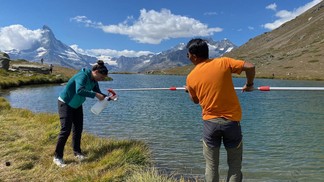
In a laboratory setting, scientists observed that bacteria from Swiss alpine lakes, already resistant to viruses that infect them, could also reduce the infectivity of unrelated viruses like Echovirus 11, Influenza A, and Potato virus X. These bacteria thrive in extreme conditions, suggesting adaptations that may confer broader antiviral capabilities.
While previous research indicated bacteria can 'remember' past viral infections through DNA, the exact molecular mechanisms behind these observed antiviral properties remain unknown. The production of enzymes is a potential factor in neutralizing viral activity.
Promising applications are emerging in agriculture, specifically for combating plant viruses in hydroponic systems. Tests showed that plants exposed to these bacteriophage-resistant bacteria became less vulnerable to harmful viral infections.
However, researchers emphasize that this is an intermediate step, and further research is needed before real-world application in hydroponic environments.
Future research will focus on understanding the role of microorganism biodiversity in alpine ecosystems, especially amidst rapid environmental changes. Identifying the precise molecular mechanisms of these bacteria is also a key objective.
This knowledge could eventually lead to innovative, biologically inspired approaches for water treatment and improved water safety.
AI-samenvatting op basis van de bron.
EPFL