designboom · Creativity & design
Ceramic Tiles Translate Electromagnetic Fields into Switchstation Facade
A 40-square-meter 3D-printed ceramic artwork, named Powerwall, has been integrated into the facade of a new electrical switchstation in Beverwijk, Netherlands. Designed by Studio RAP and Powerhouse Company for energy operator TenneT, the artwork aims to blend essential infrastructure with its urban surroundings.
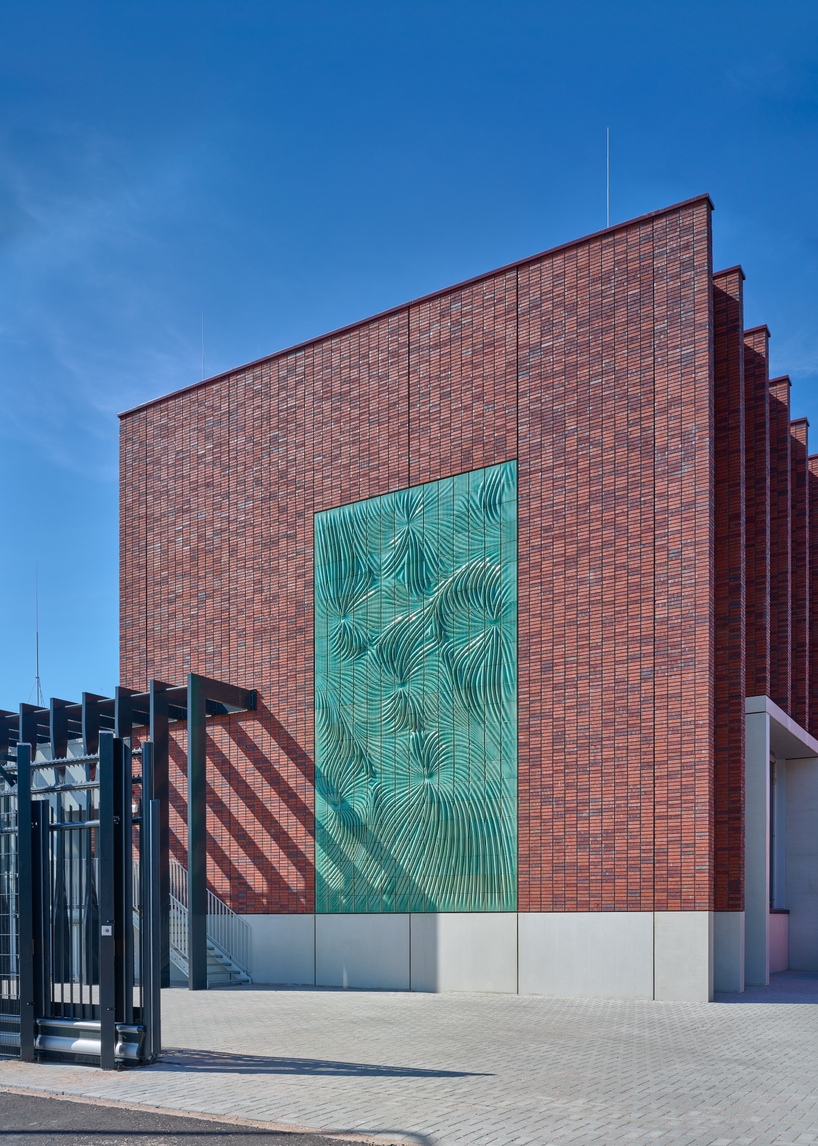
The switchstation's facade features 322 unique, 3D-printed ceramic tiles that form a large-scale relief. This design is inspired by the invisible electromagnetic fields generated by the electrical equipment inside.
Studio RAP used computational design and robotic clay printing to create the individual tiles, which were then assembled into an 8-by-5-meter continuous surface. After firing, the tiles were finished with a translucent turquoise glaze that highlights the relief's textures and depths.
The architectural composition combines a brick volume for the main electrical installation with a metal volume for secondary functions. Deep brick piers and sculptural metal lamellas add rhythm and depth, while the ceramic artwork provides a contrasting yet integrated element.
The interplay of sunlight on the glazed ceramic surface causes its appearance to change throughout the day, revealing different lines, folds, and depths. This dynamic quality enhances the building's architectural presence.
The project explores how essential energy infrastructure can be designed to respond to its architectural context, especially as such facilities become more common in urban areas.
Powerwall is part of Studio RAP's broader work in digital craftsmanship, utilizing computational design and robotic 3D clay printing for architectural elements. Powerhouse Company is an international practice involved in various building types.
AI-samenvatting op basis van de bron.
designboom