Carbon Brief · Klima & Natur
Himalayan Floods: Bedrock Collapse Triggered Disaster, Climate Change Role Under Investigation
A catastrophic flash flood in the Himalayas killed over 1,300 people. Scientists now understand the event began with a bedrock collapse, not solely a glacial one, but are investigating the role of climate change in increasing such risks.
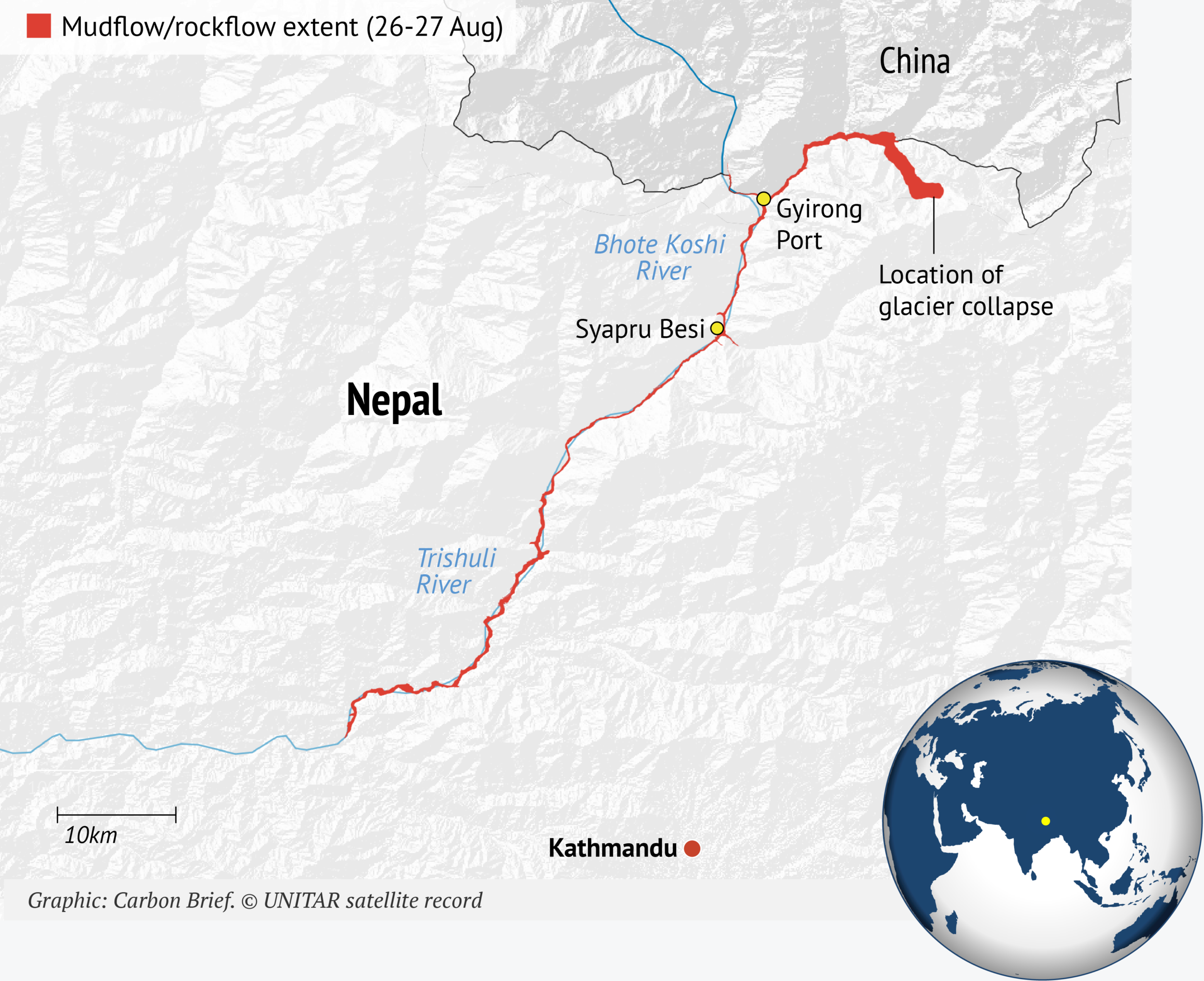
The disaster began when bedrock and glacier ice detached from Langtang-Lirung mountain, triggering a debris flow. This formed a temporary lake that burst, sending a destructive wave downstream through Nepal and Tibet, causing widespread devastation.
Initial reports focused on glacial collapse, but satellite imagery revealed bedrock failure. Scientists suggest this mechanical failure of the mountain itself was the primary trigger. Such bedrock failures are becoming more common in mountain regions.
While some dismiss climate change's role, scientists highlight that rapid warming is likely increasing the probability of such ice-rock avalanches. Factors include thawing permafrost and glacier retreat.
Temperatures in the region have risen significantly. Glacial areas have warmed at over three times the rate of lower elevations. The collapse site experienced rising summer temperatures since 1940.
Warming temperatures are linked to thawing permafrost, weakening rock stability. Meltwater from permafrost and glaciers also contributed to the water volume.
Glaciers are retreating at an accelerated rate. This retreat can reduce mechanical support for underlying rock slopes, potentially contributing to instability.
While a formal attribution study is pending, scientists emphasize that warming trends are making these high-mountain disasters more likely.
AI-samenvatting op basis van de bron.
Carbon Brief