Our World in Data · Mens en maatschappij
Malaria's Relentless Toll on Children: A Childhood of Illness
Malaria is a severe illness, often described as worse than the flu, with symptoms including intense fever, chills, body aches, and vomiting. While it kills over 600,000 people annually, primarily children, the non-fatal impact of frequent infections is also devastating.
A standard malaria infection causes flu-like symptoms that can escalate to severe fever, uncontrollable shaking, deep aches, and debilitating headaches. Some experience extreme pain, believing they are dying.
For many children in high-transmission areas, malaria is a recurring ordeal, with some suffering over 100 infections throughout their childhood. While donations can save lives, they also prevent immense suffering.
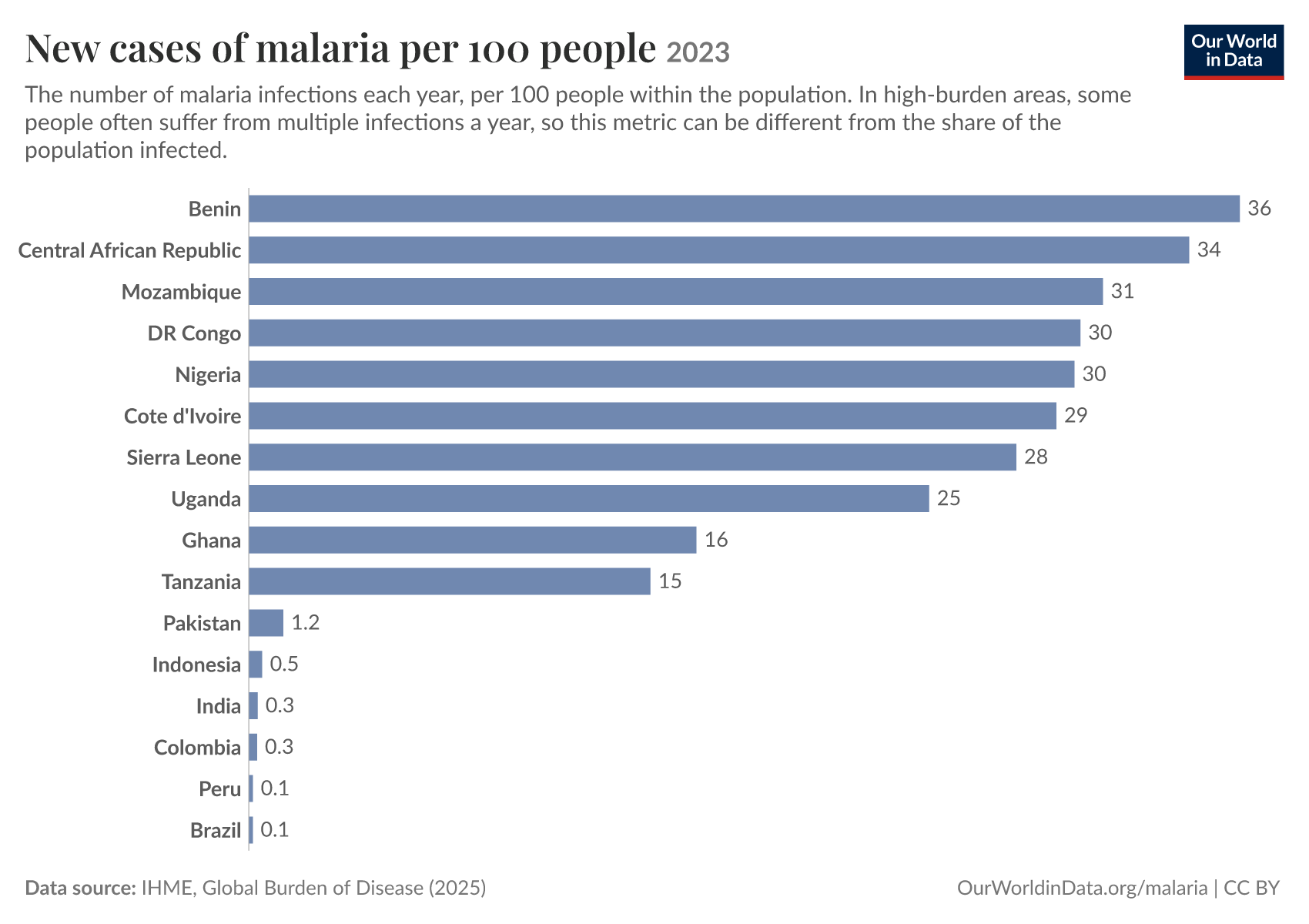
Globally, there are about 280 million malaria cases yearly, with Africa being the focal point. Countries like Benin and Nigeria report around 30 new cases per 100 people annually.
In highly affected regions, malaria disproportionately impacts children under five. In Benin, nearly every child under five contracts malaria annually, with some experiencing up to six infections per year.
A long-term study in Senegal revealed that the median child endured 43 malaria attacks during their childhood, with some experiencing over 100. This relentless cycle hinders development and causes malnutrition.
However, progress is possible. The introduction of insecticide-treated bed nets has drastically reduced infection rates, demonstrating that this preventable disease can be combatted effectively and affordably. A single bed net costs approximately $2.
AI-samenvatting op basis van de bron.
Our World in Data